




Chukat (Statute) & Balak Num. 19:1-25:9
Updated: Jul 5
This week contains a double-portion reading: Parashat Chukat/חֻקַּת ("Statute") and Parashat Balak/בָּלָק--covered in.
The subject matter between these readings is extensive, prophetically rich, and mysterious. Remember from our prior Living Stones class on Torah, "Chukim" (s. Chok) are commandments for which human logic offers no rationale. Their purpose is known only to God, and the people are simply expected to obey. This premise is very challenging to the Western mind of today. We demand explanations in order to be fully satisfied. This worldview was discussed last Wednesday in our class, and is the by-product of the block-logic process.
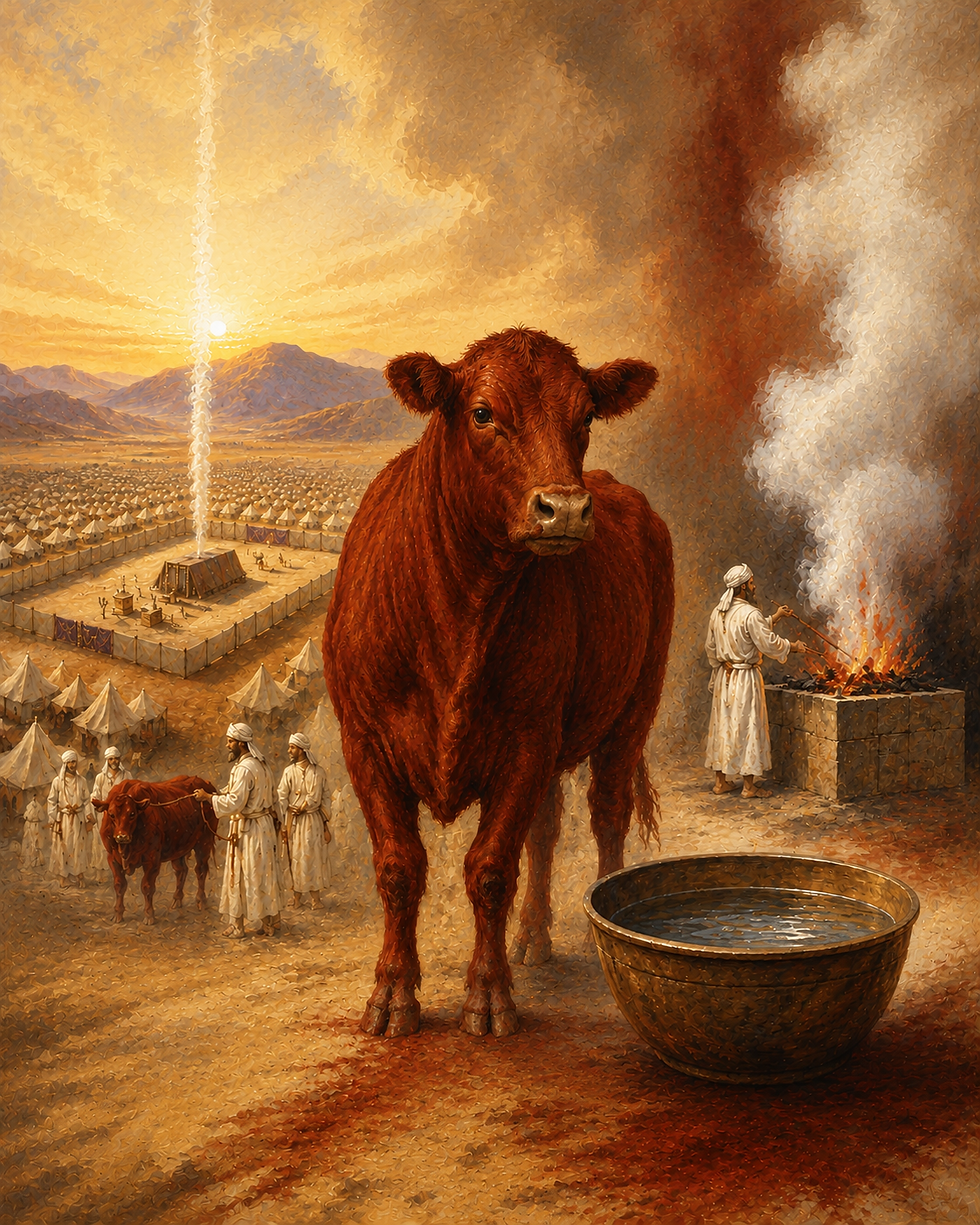
The context of Parashat Chukat is the mysterious פָרָה אֲדֻמָּה תְּמִימָה/parah adumah t'mimah, the "unblemished, red heifer." The Messianic allusions in this text are profound and seemingly endless. Many of you know that the word for "red" has its origin in the ground (adamah/אֲדָמָה). We read in Gen. 2:7 that Adam was created from the dust of the "adamah" (earth's ground). Man literally was named after the redness/ruddiness of the local soil. Apparently, Adam took on the healthy, red glow of the ground. The word for blood is דָּם/dam--same root. The first time we read the word "blood" in the Bible is in Gen. 4:10, where the blood of Abel cries out to God from the ground/soil (adamah). You see, man's blood was never intended to be spilled onto the soil of the earth. No blood was ever to be spilled prior to sin entering into the world. It was this event that appeared to form the foundation of the mysterious "red" heifer.
In Num 19, the choice, exceedingly rare animal was to be "perfect/blameless", (in its redness) and more accurately, "whole/complete." It was to have no defect, upon which no burden of yoke has ever been placed. Remember that the first-century phrase, "the yoke of the kingdom of heaven is a metaphor describing the voluntary submission of one's life, will, and daily actions to the sovereignty of God. Interestingly, Yeshua speaks of the gentle, light yoke in Matt. 11, as he desires to place upon the shoulders of His disciples a restored "burden" of heavenly, Torah submission. This hearkened back to the pure Word, unaffected by centuries of legalistic additions.
Yeshua is the fulfillment of the mysterious foreshadowing seen in the red heifer. Man's blood soaking into the soil of the earth was a tragic portrayal of sin's outcome. The way to change the course and the impact of death upon a person was to offer a complete and perfect animal. While some of its blood was caught by the priest and sprinkled seven times towards the Sanctuary, some naturally fell, and soaked into the earth. This was all performed outside the Holy Sanctuary.
The consumed animal's ashes were then mixed with water and used in the intricate purification ceremony, thereby removing ritual impurity that resulted from contact with death. There isn't space to discuss the finer details here, but as you can see, the Messianic Implications are numerous!
We would be remiss if we didn't add to this mix the principal of the dual Adam. Rabbi Paul plays on this narrative when speaking to the young community in Corinth. He states:
"The first man was of the dust of the earth; the second man is from heaven." 1 Cor. 15:47.
The context here is the physical resurrection of the dead. In it, he contrasts the "two Adams," one (original) physical, and the other (second) spiritual. Death arrived through the first, and life arrived through the second. Through the death and resurrection of the second, the perishable nature of the first would now transition to imperishable.
As previously discussed, the term for human being is "ben- adam," literally meaning, "son of Adam/man." It highlights the formidable challenges of our humanity. In His eternal compassion and empathy for our fallen state, ADONAI brought forth His Son as the perfect/complete Son of Man. Unblemished and unburdened by sin. His sacrifice and "ashes" would allow us entry into the camp, removing our uncleanness, and would enable us to once again come before a Holy God with offerings and sacrifices. His blood would mix with the earth's soil, offering not only redemption but addressing the crying out of Abel's innocent blood--along with that of all those who have died while sanctifying God's Name.
Man's state of fallen impurity was communicable, serving as a reminder of the impact that our actions and words have on others. We must think before we speak, and think before we act. Not doing so can cheapen the shed blood of the perfect sacrifice, making common the spilled blood of the heavenly red heifer--the second Adam--Yeshua. He was the perfect sacrifice, and set the perfect example for conducting one's way of life.


Comments